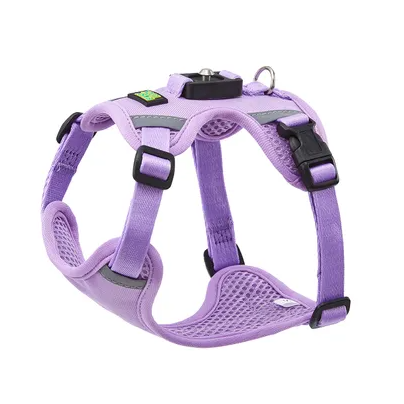
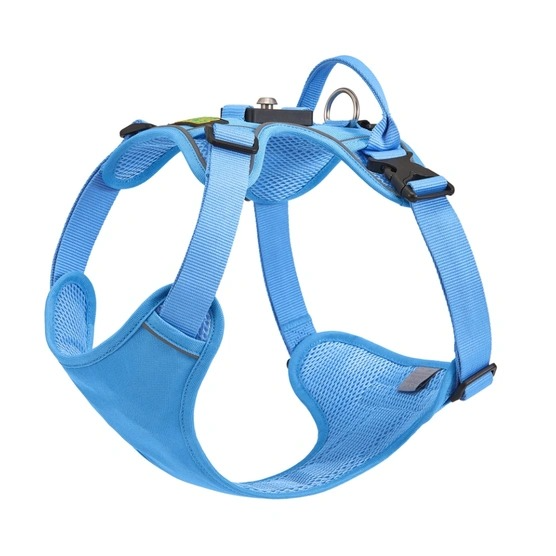
Engineering Safety: The Critical Role of Material Science in Automotive Grade Pet Safety Restraint Manufacturing

Executive Summary: As the pet travel market expands, the demand for reliable safety equipment has shifted from basic accessories to rigorously tested engineering solutions. This article explores the technical challenges of kinetic energy management in vehicle accidents and how advanced materials like zinc alloy and high-density nylon define the quality of a professional Automotive Grade Pet Safety Restraint.
Context & Challenge: The Physics of Pet Travel Safety
In the global pet supply industry, a significant gap exists between aesthetic accessories and functional safety devices. The primary pain point for retailers and distributors is the prevalence of low-quality restraints that fail under dynamic stress. When a vehicle traveling at 50 km/h stops suddenly, a 30kg dog becomes a projectile exerting forces exponentially higher than its static weight. Standard walking leashes or inferior seatbelts cannot withstand this instantaneous G-force spike.
The challenge for ODM/OEM manufacturers is not just creating a tether, but designing a system that manages kinetic energy dissipation while maintaining structural integrity. Market analysis indicates that procurement failures often stem from overlooking three key factors: metal fatigue in latch mechanisms, insufficient tensile strength in webbing, and the lack of shock-absorbing buffers. Addressing these issues requires a shift from textile manufacturing standards to automotive-grade engineering protocols.
Technical Challenge Breakdown: Where Standard Products Fail
- Material Fatigue in Hardware: Many generic seatbelts utilize die-cast plastic or low-grade aluminum clasps. Under the "snap" effect of a collision, these materials suffer brittle fracture instantly. The connection point between the harness and the vehicle is the single most critical failure point.
- Lack of Dynamic Elasticity: A static rope transfers 100% of the shock load directly to the pet's skeletal system and the vehicle's latch bar. Without a buffer mechanism, even if the belt holds, the injury risk remains critical due to the sudden deceleration trauma.
- Webbing Integrity: Standard polypropylene webbing degrades rapidly under UV exposure inside a car. Over time, the fiber structure weakens, reducing the safety margin significantly below the required threshold for an Automotive Grade Pet Safety Restraint.
Engineering Insights: The Multi-Layered Protection Solution
To combat the physical forces of a crash, a professional solution must integrate high-performance materials with functional industrial design. Our approach focuses on three core pillars of stability:
1. Heavy-Duty Zinc Alloy Swivel Mechanism
Replacing standard clips with Zinc Alloy hardware ensures a higher strength-to-weight ratio. The implementation of a 360-degree swivel design is crucial not just for comfort, but for safety; it prevents the webbing from twisting, which would otherwise reduce its tensile capacity during a load event.
2. Elastic Bungee Buffer Technology
The integration of a high-rebound elastic buffer section is essential. This component acts as a shock absorber, elongating under stress to dissipate kinetic energy gradually rather than instantaneously. This significantly reduces the G-force impact on the animal.
3. High-Density Nylon with Reflective Weave
We utilize industrial-grade nylon known for its abrasion resistance. Furthermore, embedding reflective threads ensures visibility during nighttime stops, adding a layer of utility beyond the vehicle environment.
Expected Output & Benefits for B2B Partners
Enhanced Durability
By utilizing zinc alloy and reinforced stitching, the product lifecycle extends significantly. This durability translates to reduced warranty claims and higher end-user satisfaction scores for brand owners.
Universal Compatibility
The engineering design of the metal buckle tab is standardized (typically 0.83 inches) to fit almost all vehicle models globally, simplifying inventory management for international distributors.
Safety Compliance
Sourcing an Automotive Grade Pet Safety Restraint from a qualified manufacturer ensures that the tensile strength meets rigorous internal testing standards, protecting your brand from liability risks associated with product failure.
Conclusion: Securing the Future of Pet Travel
The transition from standard pet accessories to safety-critical automotive equipment is not merely a marketing trend but a fundamental shift in manufacturing responsibility. For B2B buyers, choosing a supplier that understands the physics of crash dynamics, metal alloy properties, and shock absorption is paramount. An Automotive Grade Pet Safety Restraint is more than a strap; it is a meticulously engineered system designed to save lives.
We invite global partners to examine our manufacturing processes and test reports to see how our heavy-duty solutions can elevate your product portfolio.
Ready to Upgrade Your Product Line?
Contact our engineering team for detailed specs and ODM/OEM consultation.
Request Technical Specifications