How to Adjust a Dog Harness Properly for Maximum Comfort and Safety
Ensuring your canine companion is both safe and comfortable during walks is a top priority for any responsible pet owner. While there are many options on the market, the adjustable dog harness has emerged as the gold standard for pet safety and ergonomic control. Unlike traditional collars, which can put undue stress on a dog's trachea and neck, a well-fitted harness distributes pressure across the chest and shoulders. However, the benefits of such a tool are only realized if it is adjusted correctly. A harness that is too loose can allow a dog to slip out and face potential hazards, while one that is too tight can cause painful chafing, restrict natural movement, and even lead to long-term skeletal issues.
At EASY LOCK, we understand that every dog is unique in its anatomy and gait. Whether you have a barrel-chested Bulldog or a slender Greyhound, the versatility of an adjustable dog harness allows for a customized fit that evolves with your pet. In this comprehensive guide, we will delve deep into the mechanics of harness adjustment, the science of canine ergonomics, and the engineering behind the industry leading solutions we provide. By the end of this article, you will not only know how to achieve the perfect fit but also understand why the right hardware and material choices are critical for your pet's well-being during every outdoor adventure.
Understanding the Anatomy of an Adjustable Dog Harness
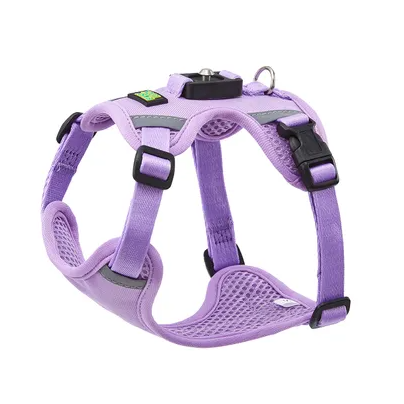
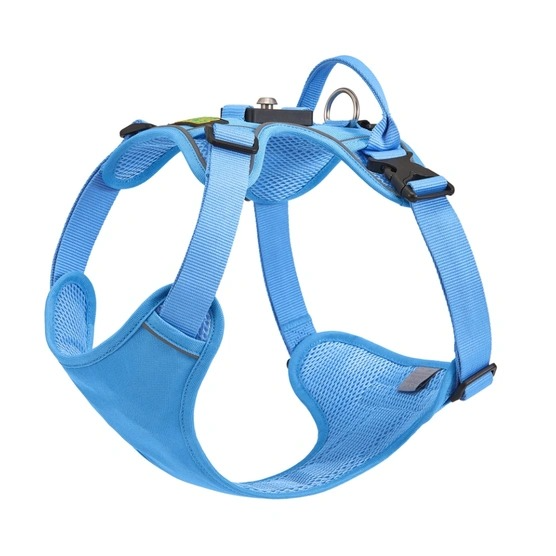
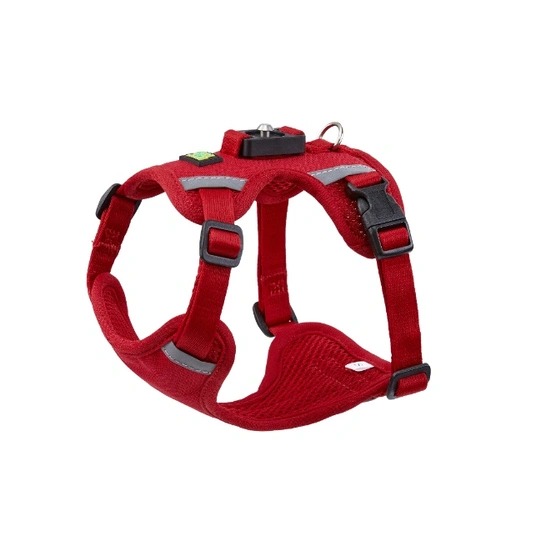
To adjust a harness properly, one must first understand the structural components that make it effective. A high-quality adjustable dog harness typically consists of several key elements: the chest plate, the back strap, the shoulder straps, and the girth strap. Each of these components features adjustment points—usually plastic or metal sliders—that allow you to lengthen or shorten the webbing. The chest plate is designed to sit comfortably against the sternum, providing a solid anchor point that prevents the harness from riding up toward the throat. The shoulder straps should follow the natural curve of the dog's neck without obstructing the scapula (shoulder blade).
The most critical adjustment point is often the girth strap, which circles the dog's ribcage just behind the front legs. If this strap is positioned too far forward, it can cause "armpit" chafing; if it is too far back, it may press against the soft tissue of the abdomen. Advanced designs, like those pioneered by EASY LOCK, incorporate specialized hardware such as zinc alloy buckles and magnetic release systems. These components are not just for ease of use; they are engineered to maintain their position under tension. Understanding how these parts interact is the first step toward ensuring that the harness functions as a cohesive safety system rather than a collection of loose straps.
Furthermore, the material of the webbing plays a significant role in adjustability. Soft-woven fabrics provide a degree of flexibility that conforms to the dog's body, while heavy-duty nylon offers the tensile strength required for large breeds. When you are working with an adjustable dog harness, you must check that the sliders move smoothly but lock firmly into place once the desired length is achieved. This balance of mobility and stability is what defines a professional-grade pet restraint system.
The Step-by-Step Guide to Achieving the Perfect Fit
The process of fitting an adjustable dog harness begins before the harness even touches your dog. Start by loosening all the straps significantly. This makes it much easier to put the harness on the dog without causing them stress or discomfort. Once the harness is positioned on the dog's body—whether it is an over-the-head style or a step-in variety—start by tightening the neck or shoulder straps. These should be snug enough to keep the chest piece centered but loose enough that the dog can move its neck freely. A common mistake is over-tightening the neck, which can be just as restrictive as a traditional collar.
Next, move to the girth straps. Tighten them gradually, alternating between the left and right sides to ensure the harness remains balanced and centered on the dog's spine. The "Two-Finger Rule" is an essential metric here: you should be able to slide two fingers comfortably between the harness straps and your dog's body at any point. This ensures the harness is secure enough that the dog cannot back out of it, yet loose enough to avoid skin irritation and allow for deep breathing and full muscle expansion during exercise.
Finally, observe your dog as they move. Have them walk, sit, and lie down while wearing the newly adjusted harness. Check for any signs of restricted movement or "bunching" of the skin. If the harness shifts significantly to one side when the leash is pulled, the straps are likely unevenly adjusted. Proper adjustment of an adjustable dog harness is an iterative process; it may take a few attempts to find the "sweet spot" where the dog seems to forget they are even wearing it. At EASY LOCK, we design our adjustment points to be intuitive, allowing owners to make micro-adjustments on the fly during a walk.
Identifying Poor Fit and Common Adjustment Mistakes
Even with the best intentions, many pet owners fall into common traps when setting up their adjustable dog harness. One of the most frequent errors is ignoring the "Y-shape" alignment. On a well-adjusted harness, the straps forming the Y at the front should meet at the breastbone. If the intersection is too high, it puts pressure on the soft tissue of the neck. If it is too low, it interferes with the movement of the front legs, leading to a shortened gait and potential joint strain over time.
Another red flag is the "leash-pull tilt." When a dog pulls on the lead, the harness should remain relatively stable. If the harness rotates significantly around the dog's torso, the girth straps are likely too loose. Conversely, if you notice your dog hesitating to jump or run, or if they develop red marks or hair loss in the friction zones (like the chest or armpits), the harness is likely too tight or the material is too abrasive. Professional-grade harnesses from EASY LOCK utilize automotive-grade materials and ergonomic padding to mitigate these risks, but even the best materials cannot compensate for a fundamentally poor fit.
Lastly, do not forget to re-evaluate the fit regularly. Dogs, much like humans, change in weight and muscle tone throughout the year. A harness that fit perfectly in the summer may be too tight over a thick winter coat. Puppies, in particular, require weekly checks as they grow at an astonishing rate. The beauty of a high-quality adjustable dog harness is its ability to grow with your pet, provided the owner remains vigilant and proactive in maintaining the correct settings.
The Engineering Excellence of EASY LOCK Pet Safety Systems
As a leader in pet safety technology, EASY LOCK specializes in the manufacturing of high-performance pet restraints that prioritize both security and ease of use. Our philosophy is rooted in the belief that pet gear should be an extension of the dog's natural movement. Our flagship adjustable dog harness series is the result of years of research into material science and canine kinematics. We utilize heavy-duty zinc alloy hardware that offers superior corrosion resistance and breaking strength compared to standard plastic alternatives.
What sets EASY LOCK apart is our commitment to modularity and precision engineering. Our patented magnetic locking systems, often found in our magnetic dog collar designs, ensure that securing your pet is a seamless, one-handed operation. This same attention to detail is applied to our leather dog harness collection, which combines the timeless durability of premium leather with the modern convenience of multi-point adjustability.
Our manufacturing process involves rigorous durability testing, simulating years of outdoor wear and tear. From our light harness for high-visibility night walks to our vitality collection harness designed for active lifestyles, every EASY LOCK product is built to last. We focus on "technical architecture," ensuring that every buckle, strap, and D-ring is positioned to maximize safety and minimize the risk of mechanical failure. When you choose EASY LOCK, you are investing in a product backed by a legacy of engineering excellence and a passion for pet welfare.
Frequently Asked Questions (FAQ)
Q1: Why is an adjustable dog harness better than a standard collar?
An adjustable dog harness is superior because it prevents "tracheal collapse" by moving the pull force from the neck to the chest. This is especially important for small breeds and dogs prone to respiratory issues. EASY LOCK harnesses take this a step further by using ergonomic padding to ensure that even during intense pulling, the dog remains safe and comfortable.
Q2: How do I know if my adjustable dog harness is too tight?
The best way to tell is the "two-finger" test. If you cannot fit two fingers under the straps of your adjustable dog harness, it is too tight. Additionally, watch for signs of skin redness or if your dog seems hesitant to move naturally. EASY LOCK's smooth-gliding sliders make it easy to loosen the fit instantly if you notice any discomfort.
Q3: Can an adjustable dog harness prevent my dog from pulling?
While an adjustable dog harness is not a magical cure for pulling, a front-clip harness can significantly help with training. By redirecting the dog's momentum back toward the owner, it discourages forward lunging. EASY LOCK harnesses feature reinforced D-rings that provide excellent control for training sessions.
Q4: How often should I check the fit of my adjustable dog harness?
You should check the fit of your adjustable dog harness at least once a month, or more frequently if your dog is growing or changing coats. Straps can also slowly loosen over time due to heavy use. EASY LOCK uses high-friction adjustment hardware to ensure that once you set the fit, it stays secure for longer periods.
Q5: Why choose EASY LOCK for your next adjustable dog harness?
Choosing an EASY LOCK adjustable dog harness means choosing a product engineered with precision and safety. We use premium zinc alloy and patented magnetic buckles that offer unmatched reliability. Our designs are based on professional dog training insights and mechanical engineering standards, ensuring your pet has the best gear available on the market.
Invest in Your Pet's Safety Today
A properly adjusted harness is the foundation of a happy, healthy relationship between you and your dog. Don't settle for "good enough" when it comes to pet safety. Experience the difference of professional-grade engineering and ergonomic design.