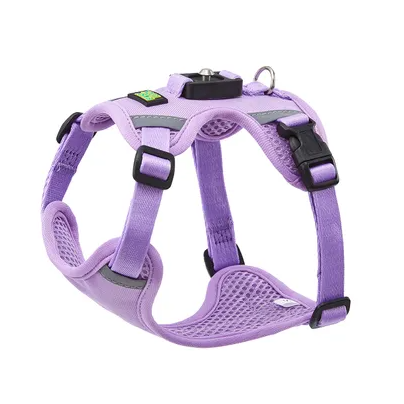
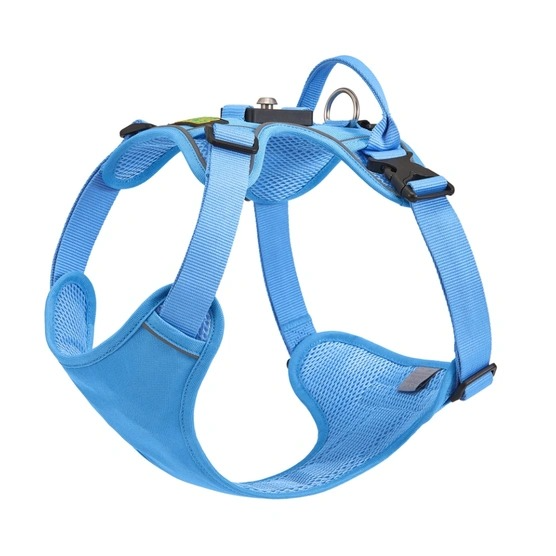
How a One-hand Dog Harness Helps Owners With Limited Grip Strength
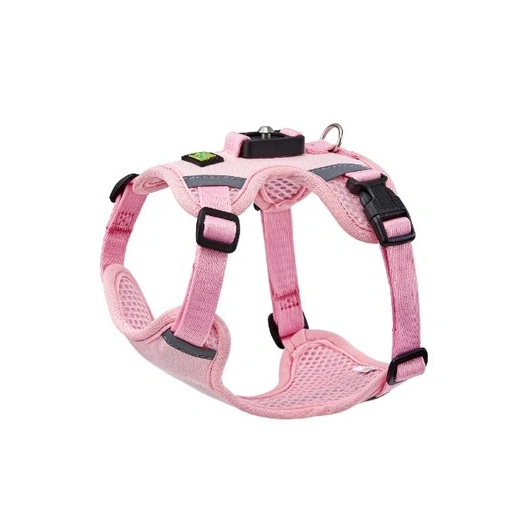
A one-hand dog harness restores independent walking to owners with limited grip strength — arthritis, injury, prosthetics, or a hand permanently occupied by a mobility aid. Traditional buckles were never designed for these users; here is how the one-hand category works, from closure engineering to what accessibility-minded buyers should stock.
A one-hand dog harness helps owners with limited grip strength by removing the two demands a traditional buckle makes on the hands — sustained squeeze force and precise two-handed alignment — and replacing them with a single low-force touch. The result is that fitting a harness moves from a two-handed struggle to a one-motion action that works with arthritic thumbs, weakened grips, one prosthetic hand or a hand occupied by a cane. As the manufacturer of the patented single-touch magnetic closure behind this category, EASY LOCK builds for exactly these users, and this article explains how a one-hand dog harness delivers that independence — and how the retail and distribution trade should serve this large, underserved and loyal customer group.
Understanding the Necessity: Who This Buyer Is
The group is far larger than most product ranges acknowledge. It includes senior owners with arthritis in the thumbs and fingers — the most common presentation, and the reason grip strength declines measurably with age. It includes owners recovering from hand and wrist injuries or surgery, owners living with conditions that affect fine motor control, owners who use a mobility aid — cane, walker, wheelchair — and therefore permanently have one hand committed. And it includes owners for whom the limitation is temporary but total: the broken wrist that turns six weeks of walks into a daily negotiation with a side-release buckle.
What unites the group is the interaction problem. A traditional side-release buckle requires the user to grip two housing halves, bring them into precise alignment under the dog's chest, and squeeze with enough force to overcome the spring latch — typically with the non-dominant hand bracing the harness against a moving animal. Every element of that sequence scales badly with reduced hand function: alignment demand punishes tremor and limited dexterity, squeeze demand punishes weakness, and the two-handed requirement punishes anyone whose other hand is holding a cane, a leash, or simply cannot pinch reliably. Our customer partners across 15 countries consistently report the same pattern from this segment: the harness is not returned because it fits badly, it is abandoned because it cannot be fastened.
That abandonment is the human cost the category answers. Walking a dog is, for many owners in this group, the day's main exercise, routine and social contact — and the equipment should never be the reason it stops. This is the necessity behind the one-hand dog harness, and it is why we treat accessibility not as a niche SKU but as a design axis for the whole dog harness collection.
The Engineering: Where the Hand-Force Goes
The one-hand dog harness works by redesigning the closure's demand profile. Our fifth-generation EASYLOCK magnetic system — the magnetic quick-connect stainless steel closure protected by our national patents, including the Mag-Clip single-touch release described on our magnetic buckle technology page — splits the traditional buckle's job into two steps that impose almost no demand on grip.
Step one is alignment, and the owner does not perform it — the closure does. Bring the two halves into the same neighborhood, within a few centimeters, and the magnetic array pulls them into correct orientation. This single change eliminates the precision demand that defeats tremor-affected and low-dexterity hands: there is no wrong angle to find, no halves to line up by eye under a moving dog. Step two is seating and retention: the halves contact, a stainless steel mechanical latch engages, and one light thumb-press on the release face completes or opens the connection. The press force required is deliberately low, and the press surface is sized for a whole thumb pad rather than a fingertip — details that matter enormously to arthritic hands and cost nothing for everyone else.
Two more design decisions complete the accessibility profile. The closure tolerates one-handed operation as its primary mode, not a fallback: the leash side of the connection can rest in the owner's lap, on a table, or against the dog's back while the working hand does everything. And the release is as easy as the closing — instant, one-touch, no squeeze-and-twist — because limited grip strength makes removal as critical as fitting: the end-of-walk moment is when the owner is most tired and the dog is most impatient.
Underneath the interaction design sits the same safety specification as the rest of the range: the mechanical latch, not magnet force alone, holds the closure under load, with the assembly pull-tested to 190kg+ using production stitching. Accessibility and retention are independent axes — ease of operation never trades against holding strength — and buyers should verify that independence with any supplier claiming both.
Beyond the Closure: The Rest of the Harness for Limited-Grip Users
The closure is the headline, but a genuinely accessible harness is designed at every touchpoint. Adjustment sliders must turn easily and lock positively — a slider that needs a hard pinch to set defeats owners with weak hands, so our adjustment buckles are specified for light, positive setting. The webbing must slide through sliders smoothly, because stiff, high-friction webbing transfers the fitting effort from the buckle to the strap. And the fabric system must make the dog's cooperation easy: ultra-soft woven material with an anti-chafe finish means the owner is fitting comfortable gear, which matters doubly when the fitting hand is the limiting factor — a dog that flinches at rough webbing turns every fitting into a two-person job.
Sizing and fit geometry serve accessibility too. A harness that goes on without lifting a leg — step-in-avoidant, over-the-head or full-open designs depending on the model — respects owners who cannot crouch, brace or manipulate a dog's limbs. Our senior-focused comfortable configurations, covered in detail in our guide to the comfortable dog harness, share most of these requirements, and the two segments overlap heavily in practice: the owner with limited grip is very often the owner with the senior dog, and products that serve one well tend to serve the other.
The Accessibility Specification at a Glance
- Magnetic self-alignment — no precise fitting by eye or feel
- One-touch, low-force press to close; equally light instant release
- One-handed operation as primary mode, leash-side resting supported
- Mechanical latch retention — 190kg+ pull-tested, independent of ease of use
- Light-setting adjustment sliders; smooth, soft, anti-chafe webbing
- Fitting that requires no crouching, bracing or limb manipulation
How to Choose the Right One-hand Dog Harness for Your Market
For retailers and distributors, the accessibility segment carries a commercial profile worth understanding. The need is durable, not fashionable — arthritis does not go out of style — and the customers are exceptionally loyal to products that restore independence: a harness that lets an owner walk their dog unassisted earns word-of-mouth through communities (senior centers, rehabilitation networks, online forums) where purchase decisions are discussed and trusted referrals carry unusual weight. Counter staff need one question — "any trouble with your hands?" — to route the customer correctly, and the demonstration sells itself in five seconds: one hand, one touch, done.
Buyers should also note the cross-segment halo. The one-hand dog harness configuration is the same product that serves busy parents holding a child's hand, joggers who want a fast fitting, and any owner who has ever tried to clip a buckle with gloves on in winter. Accessibility engineering is usability engineering; the shelf story can be inclusive while the product serves everyone — which is why our partners position the one-touch range broadly rather than medically. The full configuration set, from the accessibility-focused models through the Vitality Collection harness and the complete product catalog, shares the same closure platform, so the segment requires no separate inventory logic.
For OEM customers, two customization notes: housing and release-face sizing can be tuned during sampling for specific market feedback (larger press surfaces for senior-heavy markets, for example), and the full size curve XS to XL carries the same closure, so accessibility-led lines do not fragment your SKU structure. EASY LOCK — founded in 2018 on more than 15 years of webbing manufacturing, now serving customers in 15 countries — handles these programs at factory level, where the closure is actually made.
Designing for the Hands: What Low-Force Actually Requires
"Easy to press" is an engineering outcome with named variables, and spelling them out helps buyers evaluate claims. Press force: the thumb-load needed to seat and release the closure, which we specify low enough for arthritic hands while keeping the release deliberate enough that accidental contact cannot trigger it. Press surface: a thumb-pad-sized face rather than a fingertip button, spreading the same force over more skin — the difference between comfortable and painful for swollen joints. Travel distance: a short, definite stroke that gives confirmation without requiring precision. And tolerance to approach angle: a hand affected by tremor cannot present the closure perfectly square, so the magnetic alignment funnel must accept an off-axis approach and correct it silently.
None of these variables shows up on a product page, which is why the demonstration matters and why the specification matters more. When we review OEM accessibility programs with brand owners, these four lines are the ones we put in writing — because a one-hand dog harness that misses any of them quietly reverts to being a two-hand product for exactly the users it was named for.
Frequently Asked Questions
Q1: Can the harness really be fastened with one hand?
Yes — one-handed operation is the primary design mode, not a compromise. The magnetic self-alignment removes the precision demand and the one-touch press removes the squeeze demand; the working hand performs the entire fitting while the leash side rests on a table, lap or the dog's back.
Q2: Does the easy closure mean the harness opens too easily?
No — ease of operation and retention strength are engineered independently. The mechanical stainless steel latch holds the closure under load, verified to the same 190kg+ pull standard as the whole range; the release requires a deliberate one-touch press that a leash snag or paw cannot replicate.
Q3: I also use a cane — is fitting still possible?
Yes, and this scenario is part of the design brief. With one hand committed to the cane, the entire fitting — from leash-side positioning to closure to adjustment — is executable with the free hand, and the release is equally single-handed at the end of the walk.
Q4: What should retailers stock for accessibility customers?
The one-touch magnetic range across the full size curve, positioned as everyday usability rather than medical equipment — the demonstration (one hand, one touch) is the entire sales process. For OEM accessibility-led programs, contact the factory; the closure platform spans every model we build.
Final Thoughts
A one-hand dog harness helps owners with limited grip strength by re-engineering the closure's demands: alignment delegated to magnets, force reduced to a light one-touch press, and one-handed operation made the primary mode — all without trading away the 190kg+ retention that safety requires. For the owner with arthritic thumbs, the result is not convenience; it is the walk itself, unassisted, every day. That is the category's real product, and it is why we build the closure rather than buy it.
The one-hand dog harness range — patented fifth-generation magnetic closure, full size curve, accessibility-first ergonomics — is on the EASY LOCK one-hand dog harness page for B2B review.
Try the One-Touch Fitting Yourself
Order a demonstration set for your store or program and experience one-hand fitting in five seconds — full size curve and OEM options from the factory.
Get a Demo Set