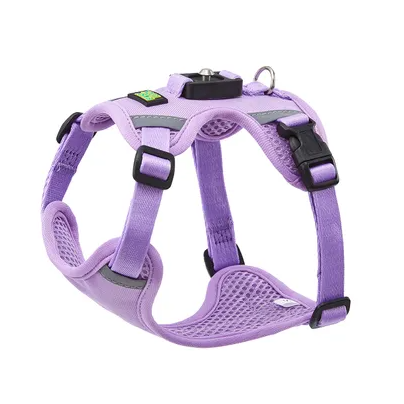
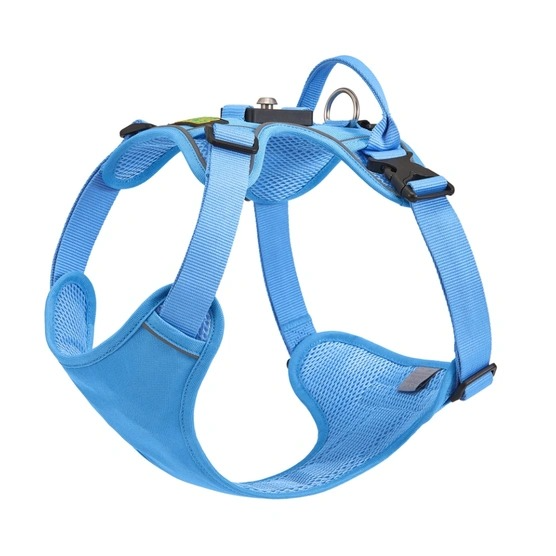
What Arthritic and Senior Dogs Need From a Comfortable Dog Harness
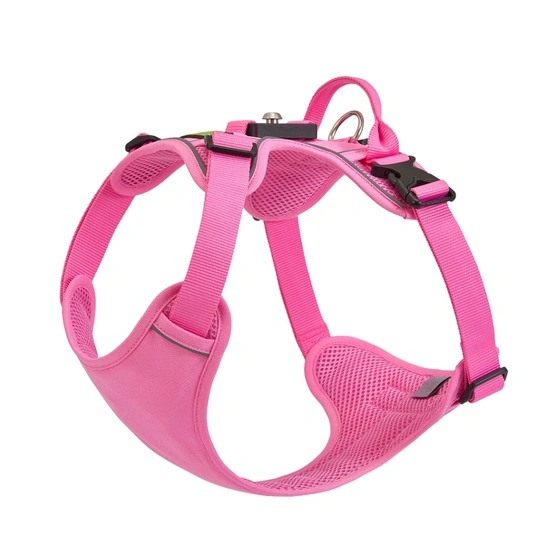
A comfortable dog harness for an arthritic or senior dog is a different specification, not a padded standard product: soft pressure-spreading surfaces, a zero-force closure and joint-friendly load geometry. Here is what aging actually changes about harness requirements — and how to engineer and specify for each change.
Arthritic and senior dogs need a comfortable dog harness with three things a standard harness does not prioritize: ultra-soft pressure-spreading contact surfaces, a closure that never requires the owner to compress or twist the dog's body, and load geometry that keeps force off painful joints. We build the fabrics and closures behind all three at EASY LOCK, and this article explains what aging actually changes about harness requirements — from a comfortable dog harness for a stiff Golden Retriever to a low-friction setup for a dog with hip dysplasia — so that buyers and retailers can specify the right product for the fastest-growing segment in the pet market.
Understanding the Necessity of a Comfortable Dog Harness for Senior Dogs
Aging changes skin, joints and temperament in ways that turn small harness defects into daily problems. Senior skin is thinner and less elastic; a seam ridge or a coarse webbing edge that a four-year-old dog never notices can chafe an eight-year-old's armpit raw within a single walk. Arthritic joints resent compression and twisting; a harness that has to be wrestled over a sore shoulder or maneuvered past a stiff hip is not just unpleasant, it trains the dog to resist the harness — and a dog that resists gets less exercise, which accelerates exactly the muscle loss that makes arthritis worse.
This feedback loop is why the comfortable dog harness category exists as an engineering problem and not a fabric problem. In conversations with our distribution partners — pet specialty retailers and veterinary-adjacent channels across 15 countries — the senior-dog customer is consistently described as the most loyal and the most demanding at once: loyal because the right harness keeps their dog walking; demanding because they will return anything that causes a flinch. Manufacturing for this customer has taught us where comfort actually comes from, and it is rarely where the packaging says it does.
Requirement 1: Contact Surfaces That Spread, Not Press
The first requirement is the fabric system. A comfortable dog harness for an arthritic dog must convert leash load from a line of pressure into an area of pressure. Narrow webbing under tension behaves like a strap winch — it concentrates force along its edge, and on a senior dog that edge sits directly over stiff joints and thin skin. Our standard solution is ultra-soft woven fabric with a finish that prevents chafing, specified at widths appropriate to each size class, because the webbing itself is where comfort is manufactured or lost.
This is also where vertical manufacturing matters more than anywhere else in the product. EASY LOCK carries more than 15 years of webbing manufacturing experience, which means we control the weave density, the hand-feel and the edge finishing of every strap in-house. We verify colorfastness to laundering on AATCC 61 and ISO 105 methods — senior-dog harnesses get washed frequently, often more than any other pet textile in the household — and we hold dyed, skin-contact fabric to OEKO-TEX Standard 100 expectations, because older dogs with thinner skin are precisely the population most sensitive to textile residues. For buyers, fabric provenance and test data are the fastest way to separate a genuine comfortable dog harness from a standard harness with the word "comfort" printed on the header card.
One under-appreciated detail: seam placement. On arthritic dogs, seams in the armpit and chest-contact zones matter more than padding volume. A padded harness with a bulky seam sitting over a sore shoulder is worse than an unpadded harness with flat, offset seams. When we spec senior-focused configurations — like the ones collected in our comfortable dog harness range — seam geometry is reviewed before padding thickness, and it shows in the return data our partners report.
Requirement 2: A Closure That Demands Nothing From the Dog
The second requirement is the on-off interaction. Watch an owner fit a traditional clip harness on a stiff old dog and you will see the whole problem in ten seconds: the dog must be steadied, a leg sometimes lifted, the buckle pressed together against the dog's chest while the owner's other hand holds the leash and the dog's weight shifts onto a painful joint. The harness itself may be fine; the ritual is what hurts.
This is the problem our fifth-generation EASYLOCK magnetic system was built for. The magnetic quick-connect stainless steel closure — covered by our patented Mag-Clip single-touch release technology, detailed on our magnetic buckle technology page — closes by proximity rather than by pressure. The two halves find each other and seat with one thumb-press; no squeezing the chest panels together, no pressing against the dog's body. The release is equally one-touch, which matters at the vet, after a muddy walk, or whenever a sore dog needs the harness off quickly without being maneuvered.
For senior dogs specifically, the closure also solves a compliance problem that retailers rarely see but distributors hear about constantly: owners of arthritic dogs gradually stop using gear that is difficult to fit. The harness that takes twenty seconds of wrestling gets left on the hook, and the dog loses the exercise the harness was supposed to enable. A one-touch closure removes the excuse. In our experience it is the single feature that keeps senior-dog harnesses in daily use, and it is why the magnetic closure appears across the entire senior-focused side of the dog harness collection.
Requirement 3: Load Geometry That Respects the Joints
The third requirement is where the leash pulls from. A collar transfers force to the neck — unacceptable for many senior dogs, and actively risky for breeds prone to cervical issues or for dogs with collapsing-trachea tendencies. A comfortable dog harness moves that force to the chest and sternum, but even within harnesses the geometry varies. Chest-panel attachment points sit the load low and central, over the sternum — the one structure on the front of the dog designed to take pressure. Attachment points that ride high, or harnesses that ride up onto the throat when the dog leans, quietly reintroduce the neck-load problem the harness was bought to solve.
For dogs with hindquarter weakness — hip dysplasia, degenerative myelopathy, general senior instability — many owners pair the walking harness with a support harness featuring a rear handle. The load logic is different there: the handle takes intermittent lifting and steadying force, which is why handle attachment is a structural engineering question, covered in detail in our guide to the dog harness with handle for rehabilitation use. The walking harness and the support harness serve different loads and should be specified as different products rather than compromised into one.
Senior-Dog Harness Checklist for Retailers
- Ultra-soft, anti-chafe woven fabric with documented wash fastness
- Flat or offset seams — nothing bulky in the armpit or shoulder-contact zones
- One-touch magnetic closure — no pressure needed on the dog's body during fitting
- Chest-panel leash attachment, low and central over the sternum
- Adjustable fit that holds without creeping loose mid-walk
- Width matched to size class — no narrow straps on large senior chests
How to Choose the Right Comfortable Dog Harness for This Segment
For buyers assembling a senior-dog assortment, the selection logic differs from the general harness market in two ways. First, ease of fitting outranks styling: the magnetic closure should be a non-negotiable line item, because it determines whether the product gets used at all. Second, fabric evidence outranks fabric feel: a sample that feels soft in the showroom and pills after five washes is a returns generator, so ask every supplier for wash-fastness data (AATCC 61 / ISO 105 methods) and skin-contact material standards, not just hand samples.
Size coverage deserves equal care, because senior dogs span every breed. The comfortable dog harness range should run the full XS to XL curve with the same fabric system and closure across sizes — which is how we produce it, and it keeps your SKU logic and reordering simple. For customers wanting a softer aesthetic for this segment — senior owners do not want equipment that looks medical — the Pastel Collection harness applies the same engineering in a palette that reads as lifestyle rather than mobility aid, and it consistently over-performs in specialty retail.
A final note on credibility, because this segment attracts the loudest marketing claims in the industry: no harness cures arthritis, and none should claim to. What a well-engineered comfortable dog harness does is remove the barriers that keep senior dogs from moving — friction, pressure, difficult fitting — and preserved movement is what genuinely benefits arthritic joints. That is the honest position we ask our partners to take at shelf, and it is the position this company has taken since EASY LOCK was founded in 2018: real testing (the closure line went through three years of development and 100+ rounds of material testing before release), real numbers where we have them (190kg+ pull resistance on the closures), and no promises where we do not.
Fabric Evidence: What to Request by Name
Because this segment feels marketing pressure more than any other, we train our buyers to convert adjectives into named evidence. "Soft" becomes: woven fabric with an anti-chafe finish, specified by weight per unit area, with laundering fastness verified on AATCC 61 / ISO 105 methods. "Safe on skin" becomes: dyed, skin-contact fabric held to OEKO-TEX Standard 100 expectations. "Durable" becomes: abrasion on high-rub zones evaluated per ASTM D4966 (Martindale), and closure assemblies pull-tested with production stitching — ours to 190kg+. Each conversion takes one email to request and one email to answer when the supplier actually holds the data.
The exercise has a second function beyond vetting: it sharpens your shelf story. Retail staff in the senior-dog segment tell us the named-standard conversation ("this fabric is tested to the same wash-fastness methods used for your own clothes") closes skeptical customers faster than any comfort claim, because it reframes the product from pet accessory to engineered textile. That reframing is exactly what the senior customer — who has heard every claim in the market — is waiting for.
Frequently Asked Questions
Q1: Is a harness better than a collar for arthritic dogs?
Generally yes — a harness moves leash load from the neck to the chest, which matters for dogs with cervical stiffness, tracheal sensitivity or general frailty. The harness must distribute load over the sternum with adequate width; a narrow harness only relocates the pressure problem.
Q2: Can an owner with arthritis fit this harness alone?
That is a core design target. The magnetic quick-connect closure seats with one hand and one touch, without pressing against the dog's body, and the release is equally single-touch. Owner-side accessibility and dog-side comfort are engineered together, not traded off.
Q3: How often should a senior dog's harness be washed, and does it survive it?
Senior-dog harnesses typically get washed more often than average, and our fabric system is specified for exactly that: colorfastness verified on AATCC 61 / ISO 105 methods and anti-chafe finishes that survive laundering. Frequent washing is a specification requirement, not an afterthought.
Q4: Do you offer OEM versions for veterinary and senior-dog channels?
Yes. As the factory, we support OEM and ODM customization of fabric, colorways, sizing curves and closure configurations for veterinary retail, senior-dog specialty channels and brand owners. Development conversations start from your channel's fit and fabric requirements.
Final Thoughts
A comfortable dog harness for arthritic and senior dogs is not a padded version of a standard product — it is a different specification: contact surfaces that spread load, a closure that demands nothing from a stiff body, and geometry that keeps force on the sternum and off the joints. Get those three right and you earn the most loyal customer in the pet market; get one wrong and the harness ends up on the hook within a week.
EASY LOCK builds the senior-focused comfortable dog harness line with the same engineering discipline we apply everywhere else — patented magnetic closures pull-tested to 190kg+, in-house webbing with documented fastness, and a size curve from XS to XL. The full senior-appropriate range is on our comfortable dog harness page, with the complete line-up in our product catalog for B2B review.
Build a Senior-Dog Line That Earns Loyalty
Request OEM samples of our senior-focused harness configurations — soft-contact fabrics, one-touch magnetic closures, full size curve — direct from the factory.
Ask About Senior-Line OEM