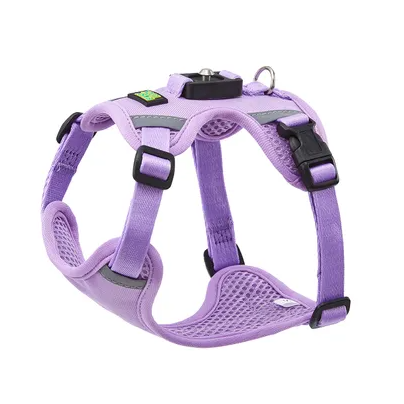
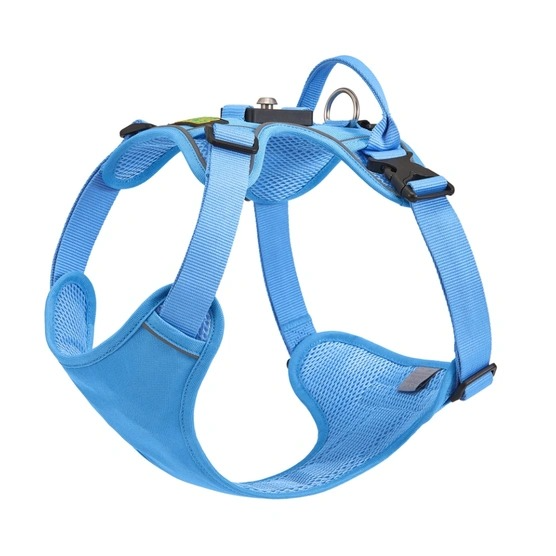
What Buyers Should Verify Before Ordering a Custom Magnetic Dog Harness
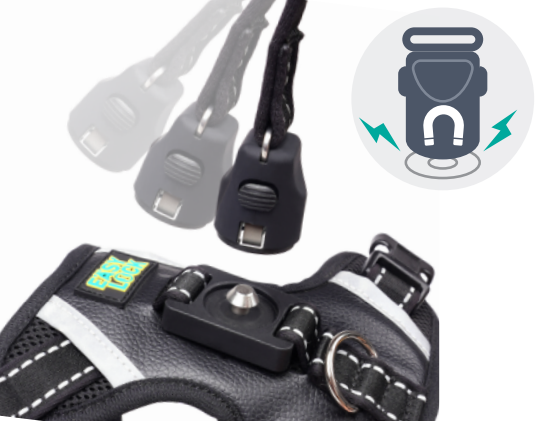
A custom magnetic dog harness order fails at the specification stage, not the production stage. Before you commit a deposit, here are the ten things buyers should verify — closure engineering, webbing provenance, test evidence, sampling discipline — from the factory that manufactures the patented fifth-generation magnetic system.
Before ordering a custom magnetic dog harness, buyers should verify five things about the closure (patent status, retention architecture, pull-test data, cycle behavior and materials) and five things about the program (webbing provenance, sampling discipline, customization depth, communication level and failure handling). A custom order amplifies everything about a supplier — good and bad — because there is no off-the-shelf fallback once production starts. This article is the verification checklist we would hand to any buyer considering a custom magnetic dog harness program, written from the manufacturing side so you know what each answer should sound like.
Introduction and Industry Context
The magnetic harness category has grown fast, and the growth has split it into two populations. One population is engineered: the closure is a patented mechanism with a documented development history, the webbing is woven under the same roof, and the test data exists because the factory needs it for its own QC. The other population is assembled: a bought-in "magnetic buckle" of unknown pedigree, attached to bought-in webbing, tested — if at all — with a certificate the factory did not generate and cannot explain. On a standard order, the difference between the two shows up eventually. On a custom order, it shows up immediately, because customization touches the mechanism's context: new webbing widths, new load geometries, new colorways and finishes around the closure housing.
We manufacture the fifth-generation EASYLOCK magnetic system in-house — protected by national patents including the Mag-Clip single-touch release described on our magnetic buckle technology page — and EASY LOCK was founded in 2018 on more than 15 years of webbing manufacturing for global brands. We see both sides of the custom-order table, and the questions below are the ones we would ask in the buyer's chair. They separate the two populations in one round of email.
Verify the Magnetic Dog Harness Closure: Five Questions Before the Deposit
1. Who owns the mechanism — and can they prove it?
Ask whether the magnetic closure is the factory's own patented design and request the patent documentation. The answer matters commercially, not just technically: a factory that owns its mechanism controls its supply, its improvement cycle and its willingness to stand behind it. A factory that buys generic magnetic buckles controls none of those things — and neither will you, once your custom colorway is built around a closure someone else can discontinue or copy.
2. What holds the closure under load — magnets or a mechanical latch?
This is the engineering question that filters fastest. In a properly engineered magnetic dog harness, magnets handle alignment and a stainless steel mechanical latch handles retention; magnet strength alone is never the load-bearing strategy. Ask the supplier to describe the retention architecture in one sentence. "Strong neodymium magnets" is a disqualifying answer for any program involving medium or large dogs; "mechanical stainless latch behind the magnetic alignment, pull-tested to 190kg+" is the answer ours gives.
3. What is the pull-test figure — and was it tested with production stitching?
A pull number without context is decoration. Ask what the closure assembly is tested to, whether the test used production sewing rather than hand-made golden samples, and whether it repeats per production lot. Our figure is 190kg+ with production stitching, verified per lot — but any specific, methodology-backed answer tells you the supplier has a test culture. Refusal or vagueness tells you the opposite.
4. How does the release behave across thousands of cycles?
Ask about cycle testing and release-force tracking. A mechanism that opens crisply on day one and stiffens by month three fails the customer without ever "breaking." A supplier who tracks actuation force across automated cycle testing — as we do before every production run — can answer with numbers; one who has never measured it will answer with adjectives.
5. What are the contact parts made of?
Ask for the material specification of the closure's contact and latch components — stainless steel by grade (AISI 304 as baseline, 316 for marine-heavy markets) rather than plated alloys that pit and seize once plating wears. Corrosion is the silent killer of magnetic closures in real households: rain, saliva and beach trips find every shortcut in the material bill.
Verify the Program: Five Questions About the Custom Process
6. Who weaves the webbing?
A custom magnetic dog harness is a system, and the webbing is the system's first component: its width, weave density and stretch behavior decide how the closure's load path performs in your custom configuration. A factory that weaves its own webbing — as we do — can tune those variables to your design; a factory that buys finished webbing inherits them. Ask the question and listen for looms, not supplier catalogs.
7. What does the sampling process actually test?
A pre-production sample should be built with the production closure, the production stitching specification and the production webbing — not a showroom mock-up. Ask what your sample represents. The discipline that matters: samples that differ from production only in labeling, because everything else has already been validated. Fabric evidence should come with the sample: laundering fastness to AATCC 61 / ISO 105 methods, abrasion on high-rub zones per ASTM D4966, skin-contact expectations per OEKO-TEX Standard 100 on dyed fabric.
8. How deep does the customization go?
Customization has layers: colorway and branding (every supplier claims it), webbing specification and size curves (factories with in-house weaving offer it), and closure-level adaptation — housing finishes, contact materials by market, press-surface tuning (only the mechanism's manufacturer offers it). Ask where their customization ceiling is. Ours is at the mechanism, because we build it; that depth is what turns a "custom color" order into a genuine product program.
9. Who answers your technical questions?
During a custom program you will ask engineering questions: can the size curve skew larger for this market, does the housing finish survive your packaging, can the webbing width step up in the XL. The answer's source matters — a trading desk relays questions; a factory answers them from the production floor. Ask who you will be talking to and how quickly technical questions turn around. Our communication runs factory-direct for exactly this reason, to customers across 15 countries.
10. What happens when something fails?
Finally, ask for the failure-handling process before you need it: when a sample fails a test, does the lot ship anyway? When a field issue appears, is there a failure-mode log and a corrective-action loop? A factory with a real QC culture describes its failure handling as routine process; one without it will promise perfection — and perfection is the least credible claim in manufacturing.
The Ten-Point Verification Card
- Closure patent documentation available on request
- Mechanical latch retention, not magnet-force-only
- Pull test with production stitching, per production lot
- Cycle testing with release-force tracking
- Stainless steel contact parts, specified by grade
- In-house webbing weaving
- Samples built to production specification, with fabric test data
- Customization depth reaching the closure itself
- Factory-direct technical communication
- Documented failure-mode and corrective-action process
How to Choose the Right Supplier Once the Answers Are In
Score the answers, not the relationship. A supplier who clears all ten points has an engineered product and a managed process, and a custom program with them is an execution task. A supplier who clears six and deflects four is telling you where your program's risk lives. And a supplier who answers adjectives to questions that have numbers as answers is telling you the most important thing of all: that the verification you just performed is the only engineering the product will ever receive.
We extend the same invitation on our own account. Verify EASY LOCK against the ten points — the patents, the 190kg+ production-stitched pull tests, the three-year and 100+ rounds of material testing behind the fifth-generation system, the in-house looms, the failure-mode discipline — and then compare us against any alternative on your list. The full current range that custom programs build from, including the core magnetic dog harness configurations and the complete dog harness collection, is open for B2B review, and custom programs run factory-direct from first sketch to shipment.
Frequently Asked Questions
Q1: What is a realistic timeline for a custom magnetic harness program?
With an existing mechanism platform and in-house webbing, sampling runs weeks, not months, because the closure engineering is already validated — customization works on color, specification and size curve, not on reinventing the mechanism. Programs that require a new closure development are a different conversation, and any honest supplier will scope them differently.
Q2: Can the magnetic closure be customized to our brand colors?
Housing finishes and colorways are configurable at the mechanism level for OEM programs — one of the advantages of the closure being our own manufacture. The retention architecture and test standards stay constant regardless of finish.
Q3: Should we request third-party testing on top of the factory's own?
You can, and for larger programs it is reasonable — third-party inspection is welcome at our facility. But note that third-party testing validates a sample lot; the per-production-lot discipline in the factory's own QC is what protects every shipment, which is why both layers exist.
Q4: What is the minimum information you need to quote a custom program?
Target market and breed-size profile, size curve, colorway and branding requirements, and expected volume band. With those four inputs, the factory can propose closure configuration, webbing specification and a sampling plan — and the ten verification points above will all have answers attached.
Final Thoughts
A custom magnetic dog harness order succeeds or fails at verification: five questions about the closure — patents, retention architecture, pull data, cycle behavior, materials — and five about the program — webbing provenance, sampling discipline, customization depth, communication and failure handling. Ask them before the deposit, in writing, and the answers will tell you everything the samples cannot. The suppliers who welcome those questions are the ones whose products survive them.
Bring the ten-point verification card to your next custom-harness conversation — including the one with us. EASY LOCK manufactures the patented fifth-generation magnetic system, weaves its own webbing, and runs custom programs factory-direct for buyers in 15 countries. Start the verification on the magnetic dog harness page or open the conversation through our contact page.
Run the Ten Points Against Our Factory
Send your market profile and let us answer the verification card in writing — patents, test data, sampling plan and program scope, factory direct.
Request the Verification Answers