When a Lightweight Dog Harness Is the Wrong Choice for Your Dog
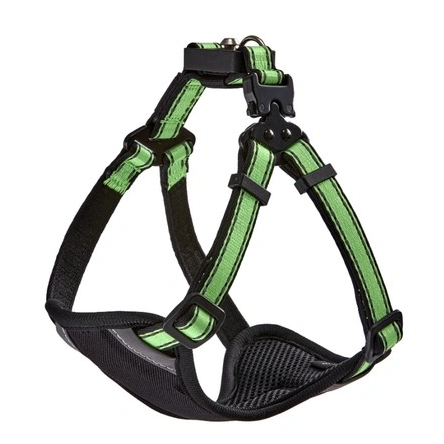
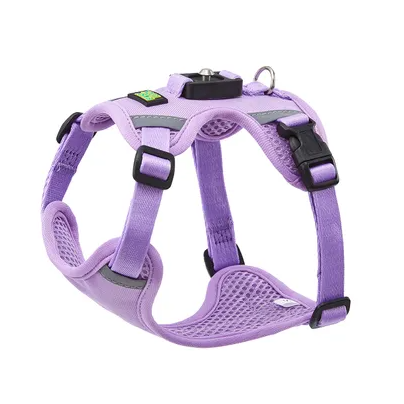
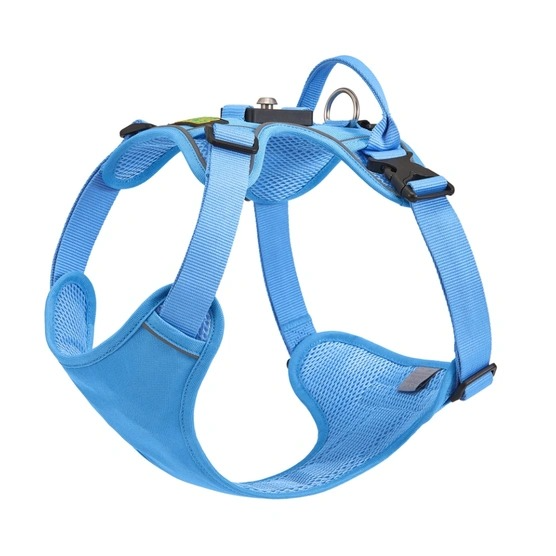
A lightweight dog harness is the wrong choice more often than the marketing suggests — for strong pullers, rough terrain and large dogs in particular. As the factory behind a dedicated lightweight line, here is our honest breakdown of when to choose light structure, when to avoid it entirely, and what to buy instead.
A lightweight dog harness is the wrong choice when your dog pulls hard, works in rough terrain, or needs maximum load distribution — in those situations, the grams you save cost you control, durability and safety. We make lightweight dog harnesses at EASY LOCK, we sell them happily, and this article is nevertheless the guide we give our own distribution partners: when a lightweight dog harness is the wrong choice for your dog, and what to spec instead. A supplier who will not tell you this is selling you a return.
Understanding What "Lightweight" Actually Changes
Weight in a harness is not distributed evenly across the design — it is concentrated where it does jobs. Structural webbing carries load; a wider, denser weave carries more of it. Padding spreads pressure; more padding means more material. Hardware — buckles, sliders, D-rings, closure housings — adds grams in exchange for strength and function. A lightweight dog harness trims all three, and each trim has a consequence that only shows up under specific conditions.
In our own production, the lightweight configurations in the light harness collection use narrower webbing widths, reduced padding thickness and streamlined hardware, while keeping the same magnetic quick-connect closure architecture as the standard line. That is a deliberate engineering trade: we remove weight from the fabric system, not from the safety-critical closure system. Understanding that distinction — which weight is safe to save and which is not — is the core of this article, and it is the question any buyer should put to any supplier in this category.
Situation 1: Strong Pullers Need More Structure, Not Less
The clearest case against a lightweight dog harness is the strong puller. Every lunge at the end of the leash transmits the dog's kinetic energy through the harness webbing and into the attachment point. Narrow webbing concentrates that load into a smaller contact band, which does two unwelcome things: it increases peak pressure on the dog's chest, and it works the stitching and webbing edges harder per step. A harness designed for a calm walker may be genuinely comfortable at zero load and uncomfortable the moment the dog hits the end of the leash.
For pullers, the physics favors width and density: wider webbing spreads the same force across more chest area, and a more substantial structure resists the deformation that makes a light harness "shift" during a pull. This is exactly the territory of our heavy duty dog harness range — heavier, yes, but heavier on purpose, with load paths engineered for the dog's worst moment rather than its average one. If your customer base includes adolescent Labradors, Huskies or any breed with a working-dog engine, the lightweight option will generate comfort complaints that the product did not deserve and the customer will not forgive.
Situation 2: Rough Terrain Punishes Minimalist Construction
Trail walking, brush, sand, salt water and repeated wet-dry cycles are an abrasion and corrosion curriculum that minimalist construction fails. A lightweight dog harness typically pairs thinner webbing with reduced edge finishing, and thinner webbing abrades through faster at exactly the points where trail use concentrates wear: the chest panel edge, the adjustment windows and the D-ring junction. In our wear-testing on abrasion resistance per ASTM D4966 (Martindale), the high-rub zones of a harness are the first to show the difference between a robust weave and a featherweight one.
Terrain also stresses hardware. Mud works its way into slim clearances; sand accelerates wear on any sliding surface. Our fifth-generation EASYLOCK magnetic system was developed through three years and more than 100 rounds of material testing precisely so that the closure survives these environments — but even a protected closure cannot compensate for a fabric system that is one trail season from threadbare. For customers whose dogs run trails, we recommend the standard-width models in the main dog harness collection, with full-width webbing and stitched-in reflective strips, and we say so to our distributors without being asked.
Situation 3: Large and Powerful Dogs Exceed the Design Envelope
Weight scales with dog size for a reason. A lightweight dog harness in the larger size classes saves grams that are trivially small relative to the dog's body weight, while giving up the structural webbing area that a large chest needs for load distribution. On a 30kg dog, the difference between a light and a standard harness is a rounding error in what the dog feels — but it is a real difference in how leash loads reach its chest, in how long the stitching survives, and in how much slack geometry the harness develops as materials work over time.
The exception that proves the rule: senior and arthritic large dogs, whose owners often ask for the lightest possible option to ease the on-off ritual. For them the right answer is usually not "lighter harness" but "lighter interaction" — a harness with a one-touch magnetic closure and soft, anti-chafe webbing, which delivers the ease they are actually seeking without sacrificing the structure a large dog still needs. Our comfortable dog harness configurations address exactly this pairing, and it is one of the most common recommendations our partners make at counter.
When Lightweight IS the Right Choice
- Small and toy breeds, where every gram is proportionally significant
- Puppies and young dogs on short, calm walks
- Hot climates, where a minimal-contact harness reduces heat load under the coat
- Dogs that resist wearing gear, where less harness means less protest
- Indoor and urban use with a well-trained, non-pulling dog
How to Choose Between Lightweight and Standard for Your Assortment
For B2B buyers, the question is not "lightweight or not" but "where does lightweight sit in my range." Our recommendation, drawn from what actually sells across our customers in 15 countries: position lightweight as the small-breed and comfort-led entry point, keep standard-width models as the volume core for medium sizes, and offer heavy-duty configurations for the large and working-dog segment. A range built this way lets every customer self-select into the structure their dog needs — and dramatically reduces the mis-buying that inflates return rates.
Two specification details protect the lightweight positioning itself. First, do not let the category's weight saving touch the closure: a quick release or magnetic closure must meet the same pull-test standard (ours is 190kg+ with production stitching) regardless of how slim the fabric system is. Second, verify the webbing source. Because we weave our own webbing — EASY LOCK carries more than 15 years of webbing manufacturing experience behind a brand founded in 2018 — we can hold a lightweight weave to the same colorfastness (AATCC 61 / ISO 105) and skin-contact standards (OEKO-TEX Standard 100 expectations) as the standard line. Buyers sourcing on the open market should demand the same evidence from any supplier whose lightweight models seem mysteriously cheap.
Where the Grams Actually Sit: Reading a Lightweight Specification Honestly
Buyers comparing lightweight models should read weight claims against a simple budget: grams saved on fabric are benign, grams saved on structure are not. In our production the honest savings come from weave density, padding thickness and strap length management — areas where a lighter build changes comfort, not safety. The dishonest savings come from narrower load-bearing webbing, thinner anchor stitching, and closures bought to a price. A useful exercise with any sample: weigh the harness, then weigh it again with the closure hardware noted separately. If the closure accounts for a suspiciously small share of total weight, the lightness was achieved somewhere you will regret.
This is also why our lightweight configurations keep the full fifth-generation magnetic closure rather than a slimmed version: the one-touch mechanism is part of what makes a light harness pleasant to live with, and it is pull-tested to the same 190kg+ standard as the heavy models. Lightness in the strap system, full engineering in the closure — that is the specification sentence we suggest buyers write into every lightweight RFQ they send, to any factory, including ours.
Frequently Asked Questions
Q1: Is a lightweight dog harness safe for puppies?
Yes — for calm, short walks it is often the ideal first harness, because light contact helps a puppy accept wearing gear. Upgrade structure as the dog grows and strengthens; our puppy dog harness guide covers the transition timing in detail.
Q2: Does lightweight mean less durable?
Not inherently — it means less material, and durability depends on how that material is specified. A quality lightweight harness uses the same closure pull-testing and fabric fastness standards as the standard line. A cheap one simply uses less of everything. Ask for the test data either way.
Q3: My dog pulls — can I still use a lightweight model?
We recommend against it. Narrow webbing concentrates pull loads on the chest and wears the construction faster. Move up to a standard or heavy-duty model with wider webbing; the comfort difference at full leash tension is immediately visible to most owners.
Q4: What should retailers stock alongside a lightweight line?
A structure ladder: lightweight for small and calm dogs, standard width as the volume core, and heavy-duty for pullers and large breeds. This lets counter staff route every customer to the right structure in one question — "does your dog pull?" — instead of guessing by breed alone.
Final Thoughts
A lightweight dog harness is a genuine product category with real benefits — for small dogs, hot climates and dogs that hate wearing gear. It becomes the wrong choice the moment pull load, rough terrain or large body size exceeds what reduced structure can handle. The suppliers worth buying from are the ones who draw that line for you in advance, because a return is more expensive for both of us than a recommendation.
EASY LOCK will keep making lightweight dog harnesses — the lightweight dog harness range is detailed on our lightweight dog harness page, and our full line, including the quick-configured light harness model, spans the complete structure ladder from featherweight to heavy-duty in our product catalog. Match the structure to the dog, and the product sells itself.
Build the Right Structure Ladder for Your Shelves
Get our full lightweight-to-heavy-duty range sheet and let our team help you match harness structure to your customer base — factory direct.
Get the Range Sheet