Where a Dog Harness With Handle Fits Into Canine Rehab and Physical Therapy
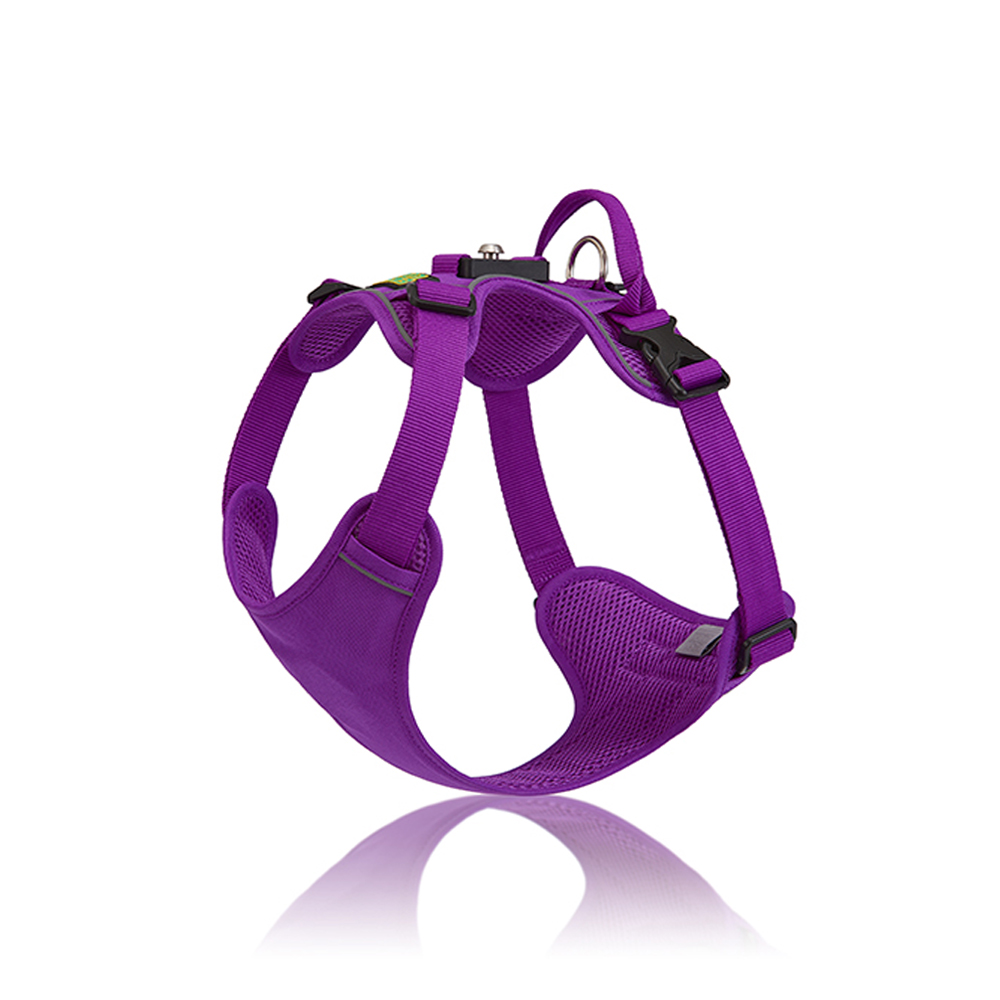
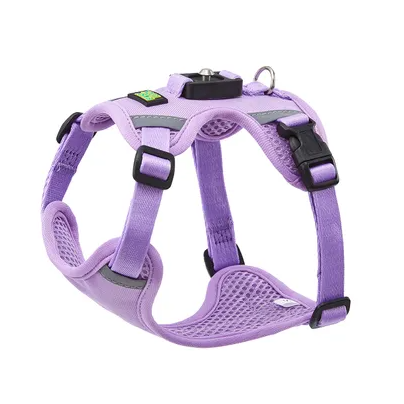
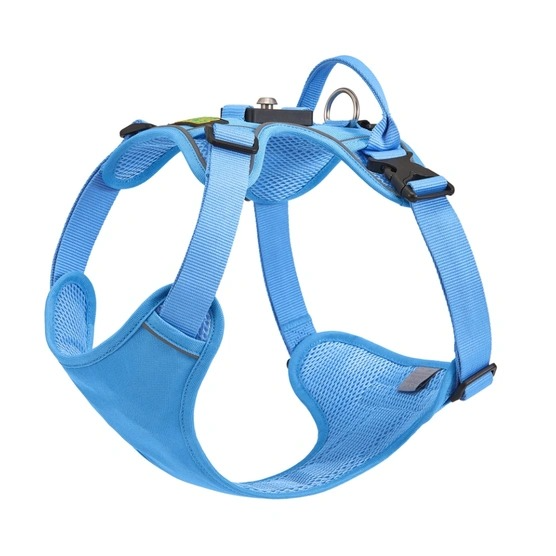
A dog harness with handle earns its place in canine rehabilitation wherever a handler must steady, guide or partially support a dog without loading its neck — and rehabilitation facilities buy this product by the case, rejecting decorative handles on sight. Here is where the handle genuinely fits into rehab workflows, how it must be engineered, and what bulk buyers in this channel should verify.
A dog harness with handle earns its place in canine rehabilitation and physical therapy settings wherever a handler needs to steady, guide or partially support a dog without pulling on its collar or neck — during assisted walking, balance work, stair practice and controlled mobility sessions. To be clear about scope: the product is equipment, not therapy — we are a harness manufacturer, not a veterinary practice, and nothing here is medical advice. What this article offers is the manufacturing view: where a dog harness with handle is actually used in rehab workflows, how the handle must be engineered to survive that use, and what rehabilitation facilities and veterinary buyers should verify before ordering a support harness in bulk.
Understanding the Necessity of a Handle in Support Work
Rehabilitation contexts share one physical reality: the dog cannot always be trusted to carry its own weight steadily, and the handler needs a dedicated, immediate point of contact that is not the neck. A leash attached to a collar or even a standard D-ring transmits force to the cervical spine — exactly the structure you never want to load on a post-operative dog, a senior dog with hindquarter weakness, or a patient recovering from spinal surgery. A structural handle on the harness back panel changes the physics entirely: the handler's assistance flows into the harness body and distributes across the chest and torso instead of concentrating on the throat.
From our position on the manufacturing side — with more than 15 years of webbing experience behind EASY LOCK and a customer base spanning 15 countries — the rehabilitation and mobility-assistance channel has become one of the most specification-sensitive segments we serve. These buyers are professional handlers: veterinary physiotherapists, rehabilitation trainers, and the owners working under professional guidance at home. They use handles dozens of times per session, every session, and they notice within days whether the product was engineered or accessorized. It is the most demanding proving ground a dog harness with handle can face, which is why we treat it as a distinct product line rather than a standard harness with a strap sewn on top.
Where the Handle Actually Gets Used: Four Rehabilitation Scenarios
Understanding the use cases clarifies the engineering requirements, so it is worth listing where the handle does its work in practice — described from the equipment side, not the clinical side.
Steadying during assisted walking. The most frequent use: the handler holds the handle loosely to stabilize a wobbly gait, catching stumbles before they become falls. The load here is intermittent and moderate, but it arrives at odd angles — the handler is beside or behind the dog, not above it — which twists lateral forces into the handle attachment points. A handle that only resists vertical pull will loosen its stitching under weeks of real use.
Guidance on stairs and thresholds. Stairs are where rehab dogs most often need a hand, and the geometry matters: a handle positioned too far forward makes the handler pull the dog's shoulders up the stair, which loads the forelimbs; a well-positioned handle over the dog's center of gravity lets the handler guide rather than lift. This is why handle position on the back panel is a design variable we tune per size class rather than a fixed template.
Balance and proprioception work. In structured sessions, handlers use the handle as a light anchor during balance exercises — the dog works, the handle stands by. Here the requirement is not load capacity but instant availability: the handle must be upright and grabbable without fumbling, which is why we shape our handles to stand naturally rather than lie flat against the panel.
Emergency support. The scenario every rehabilitation buyer asks about first: the moment a dog's legs give out and the handler must take real weight, immediately, with one hand. This is the highest-load moment the product will ever see, and it defines the engineering standard for everything — webbing, stitching, attachment and handle material. No other use case forgives a weakness here.
How a Dog Harness With Handle Must Be Engineered
Now the manufacturing substance. A dog harness with handle that will be used for support work differs from a hiking-style grab handle in four structural ways, and each one is a question buyers should put to their supplier.
First, the load path. On a support harness, force applied to the handle must route through a continuous webbing structure into the main body of the harness — not terminate at a patch of stitching on the surface fabric. Our support configurations carry the handle attachment through the same load-bearing webbing bands that anchor the chest and girth system, so an emergency lift loads the same structure that a leash load does. This is verifiable in a sample: turn the harness inside out and look at whether the handle anchors integrate with the structural webbing or just sit on the outer layer.
Second, the stitching specification. Handle anchors are sewn with box-and-cross patterns in heavy thread, and the pattern — not just the thread — is what resists the peeling loads a twist generates. Our standard closure assemblies are pull-tested to 190kg+ with production stitching; support-handle anchors are held to the same discipline, because in an emergency support moment the handle briefly becomes the most load-bearing component on the dog.
Third, webbing strength matched to weight class. A handle for a toy-breed mobility dog and one for a German Shepherd carry different absolute loads, but the specification logic is identical: the handle webbing and its anchors must exceed the maximum force a handler could realistically apply in the worst moment, with margin. Because we weave our own webbing in-house, we control that strength directly rather than trusting a supplier's certificate — a control that matters most in exactly this product category. Buyers can review the current support configurations on our dog harness with handle page.
Fourth, position and ergonomics. The handle sits over the center of gravity for the size class, stands upright for instant grasping, and is padded on the inner face for the handler's hand — because in real rehabilitation work the handler does many repetitions per session, and a wire-edge handle against bare fingers becomes its own injury risk. None of this is cosmetic; each element is a response to how the product is actually held and loaded.
Handle Engineering — What to Verify on a Sample
- Handle anchors integrate with structural webbing, not just surface fabric
- Box-and-cross stitching in heavy thread at every anchor
- Webbing strength documented per weight class, with margin over worst-case lift
- Handle positioned over the size class's center of gravity
- Handle stands upright and grips comfortably for repeated sessions
- Closure is one-touch — rehab sessions mean frequent on-off, often with a sore dog
Why the Closure Matters More in Rehab Settings
An engineering point that surprise buyers most: in the rehabilitation channel, the closure is a bigger purchase driver than the handle. Rehab and physiotherapy workflows mean the harness goes on and off constantly — before and after sessions, between exercises, at the clinic, at home. A traditional clip buckle forces the handler to press and squeeze against a dog that may be post-operative, and over a day of sessions that ritual becomes the product's defining flaw.
This is why our support harnesses carry the same fifth-generation EASYLOCK magnetic system as the rest of the range. The magnetic quick-connect stainless steel closure — covered by our patented Mag-Clip single-touch release, described on our magnetic buckle technology page — seats with one touch without pressing against the dog's body and releases equally fast. For a physiotherapist running back-to-back sessions, that difference compounds into hours saved per week; for a post-op dog, it removes the most uncomfortable moment of the visit. The closure line went through three years of development and more than 100 rounds of material testing before release, which is the background behind our willingness to put it into professional-use products.
How to Choose the Right Support Harness for a Rehab Program
For buyers equipping a rehabilitation facility, veterinary practice or mobility-focused retail line, we recommend specifying in this order: load path and stitching evidence first (ask how the handle anchors integrate with the structure and what the pull-test standard is), closure second (one-touch magnetic, for session-frequency fitting), fabric third (ultra-soft woven material with anti-chafe finish and wash fastness per AATCC 61 / ISO 105 — support harnesses launder constantly in clinical settings), and styling last. This ordering surprises general-market buyers but matches how professional channels actually evaluate product.
One boundary we hold firmly, in our own materials and in the training we give distribution partners: the harness is equipment, not treatment. We do not make therapeutic claims, we do not advise on rehabilitation protocols, and we ask retail partners to route clinical questions to veterinary professionals. What we do provide is the engineering — documented loads, verified stitching, honest material data — so that the professionals who do set the protocols can specify equipment with confidence. That division of roles is why the professional channel stays with a manufacturer long-term, and it reflects the same position we have held since EASY LOCK was founded in 2018.
For owners shopping under professional guidance: confirm with your rehabilitation professional which support style your dog's program calls for, then bring that specification to the product comparison. A dog harness with handle specified to the program — rather than bought on generalities — is safer, lasts longer and serves the handler's actual technique. The full support range, alongside the complete dog harness collection, is available for B2B review in our product catalog.
Frequently Asked Questions
Q1: Can a handle harness be used to fully lift a dog?
A full lift is a support-harness use case only if the product is engineered for it — continuous load path, box-and-cross anchor stitching, and webbing rated well above the dog's weight. Our support configurations are built to that standard; fashion harnesses with surface-sewn handles are not, and the difference is visible in the stitching.
Q2: Where should the handle sit on the harness?
Over the dog's center of gravity for its size class — far enough back that guidance does not drag the shoulders, far enough forward that rear support does not tip the dog. Position is a per-size design variable, which is why we tune it across the XS–XL curve rather than using one template.
Q3: Is a handle harness suitable for senior dogs who just wobble a little?
Yes — steadying is the most common daily use, and a handle gives the owner a safe contact point that never loads the neck. For this lighter-duty profile, pair the handle with a one-touch magnetic closure so daily fitting stays effortless for the owner as well.
Q4: Do you supply rehabilitation facilities and vet channels directly?
Yes — as a manufacturer we supply OEM and wholesale volume to professional channels across 15 countries, including documentation of pull-test standards and material data that procurement teams in this segment require. Contact the factory with your program's specification.
Final Thoughts
In canine rehabilitation and physical therapy settings, a dog harness with handle is working equipment: it carries real loads at real moments, dozens of times per session, on dogs who cannot afford a product failure. The handle must be structural — integrated load path, engineered stitching, webbing matched to the weight class — and the closure must respect both the sore dog and the busy professional. Specify those two things first, and the equipment will hold up its end of the rehabilitation program while the clinical team holds up theirs.
EASY LOCK manufactures support harnesses with the same discipline that runs through the whole range: patented magnetic closures pull-tested to 190kg+, in-house woven webbing with documented fastness, and a size curve from XS to XL. The dog harness with handle range is detailed on our support harness page for B2B buyers.
Equip Your Program With Structural Support Handles
Request factory documentation and bulk samples of our support harness line — load-path engineering, test data and full size curve included.
Get Support-Line Documentation