Why a Magnetic Buckle Dog Collar and a Matching Harness Work Better as One System
A magnetic buckle dog collar and a matching harness work better as one system than as two separate purchases — one closure behavior, one fit logic, one daily routine. Here is the system logic explained from the factory that builds the magnetic platform behind both products.
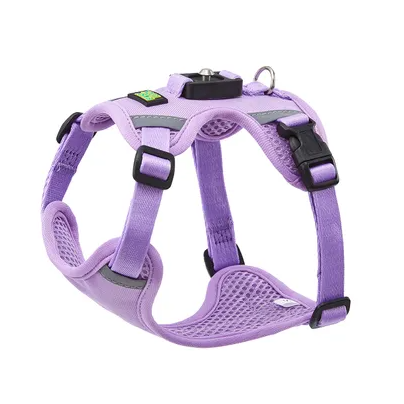
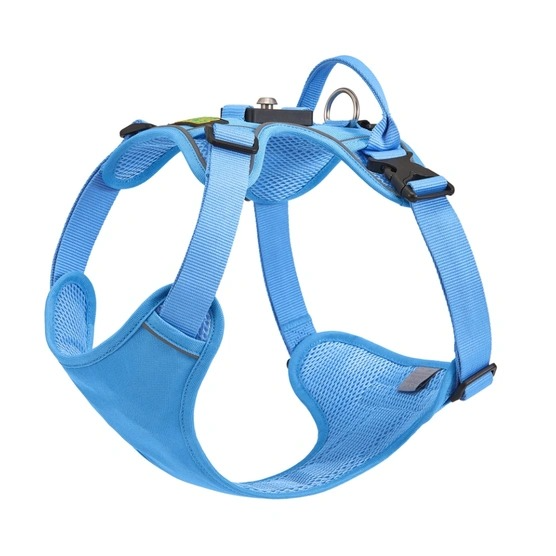
A magnetic buckle dog collar and a matching harness work better as one system because the collar and harness do different jobs — identification and light control versus leash load and walking security — and when both carry the same one-touch magnetic closure and fit logic, the owner gets a consistent daily experience while the dog gets consistent, correctly routed loads. As the manufacturer that builds the magnetic closure platform behind both product types, EASY LOCK designs them to pair from the start, and this article explains the system logic — mechanical, ergonomic and commercial — for buyers considering whether to stock the pair.
Understanding the Necessity: The Magnetic Buckle Dog Collar and Its Harness Partner
Start with the division of labor, because the system argument depends on it. The collar's permanent job is identity and tags — worn all day, removed rarely, never the right place for leash load. The harness's job is walking: it takes the force a dog generates at the end of a leash and routes it through the chest, where the body is built to accept it. Every competent fitting guide makes this point — yet the market overwhelmingly sells the two products as unrelated purchases, from different suppliers, with different closure logic, different adjustment feel and different quality expectations.
The consequences show up in the owner's daily routine. The collar fastens one way, the harness another; the collar's buckle demands one hand motion, the harness's another. For the average owner this is mild friction. For the senior owner or anyone with limited hand function, it is two separate interaction problems to solve twice a day — and, in our distribution partners' experience, a common reason gear gets simplified down to collar-only walking, which quietly returns leash load to the dog's throat. A system designed as a pair removes that failure path: same closure behavior, same one-touch operation, same fit discipline, twice a day, on both products.
The Mechanical Logic: One Closure Platform Across Both Products
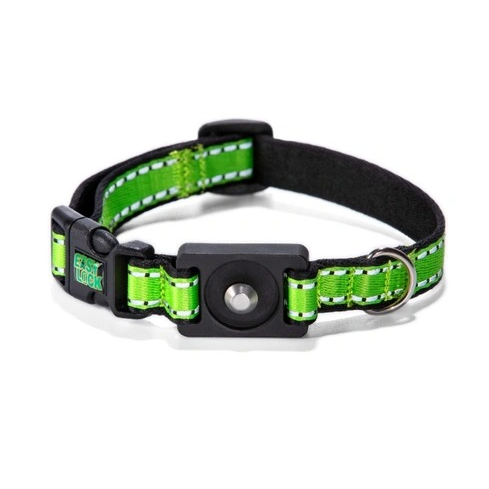
The system begins with the closure. Our fifth-generation EASYLOCK magnetic system — the magnetic quick-connect stainless steel mechanism covered by our national patents, including the Mag-Clip single-touch release described on our magnetic buckle technology page — runs across both the collar line and the harness line. The collar's magnetic buckle seats with the same proximity-plus-one-touch action as the harness's: bring the halves close, feel the magnetic alignment, one light press to close, one deliberate press to release. Muscle memory built on one product transfers instantly to the other, which is precisely the point.
The engineering underneath the familiar action is calibrated per product role. The collar's closure is dimensioned for its duty cycle — worn continuously, cycled a few times daily, carrying no leash load — while the harness closure carries the walking specification: retention through a stainless steel mechanical latch, with the assembly pull-tested to 190kg+ using production stitching. Sharing one platform does not mean sharing one dimensioning; it means the user experiences one consistent interaction while the load-bearing specification varies exactly where it should. That dual property — one feel, two duty ratings — is what a bought-in commodity closure supplier cannot offer, because it requires engineering both products from the same mechanism family.
Material consistency completes the mechanical pairing. Both products draw on the same in-house woven webbing — EASY LOCK carries more than 15 years of webbing manufacturing behind a brand founded in 2018 — with the same soft-contact finish, the same laundering fastness verified to AATCC 61 / ISO 105 methods, and the same skin-contact expectations (OEKO-TEX Standard 100) on dyed fabric. A collar that survives fifty washes next to a harness that survives five would break the system promise; shared material specification closes that gap.
The Ergonomic Logic: Consistent Loads, Consistent Handling
For the dog, the system logic is about load routing. In a collar-and-harness household, the collar carries tags and nothing else; the harness carries the leash. When the pair is designed together, the harness's D-ring and attachment geometry assume the collar's presence — compatible with traditional leashes and tags, positioned so the two products never interfere at the dog's neck and chest. The dog experiences one consistent walking setup rather than an improvised stack of gear that shifts and chafes.
For the owner, the system logic is routine efficiency. Morning: one-touch the collar off or on as needed, one-touch the harness on for the walk. Evening: reverse, with the same motion. The consistency matters most at the edges of the market — senior owners, owners with limited grip, multi-dog households cycling gear several times a day — but every owner feels it as simple fluency. In our partners' retail feedback, the paired system is one of the strongest drivers of second-unit purchases: the customer who buys the harness returns for the matching collar (or the reverse) precisely because the interaction is already trusted.
Collar + Harness System — The Division of Labor
| Product | Job | System Property |
|---|---|---|
| Magnetic buckle collar | Tags, ID, light control — worn all day | Same one-touch closure, same soft webbing, no leash load |
| Matching harness | Walking — carries all leash load on the chest | Same one-touch closure, 190kg+ retention, chest-routed load |
The Commercial Logic: Why the Pair Sells Better Than Either Alone
For B2B buyers, the system argument is also an assortment argument. A collar and harness designed as a pair merchandise together naturally: the customer who touches the one-touch closure on either product understands the other without explanation, which lowers the demonstration burden at counter and raises attachment rates. Basket-building becomes organic — the harness customer adds the matching collar for tags, the collar customer upgrades to the harness for walking — and the shared closure platform means your staff training, your returns reasoning and your brand story all apply across both lines simultaneously.
Sizing is where system thinking earns its operational keep. Because we produce both lines across the same XS to XL curve with the same closure hardware and webbing specification, a retailer's inventory logic is one curve rather than two divergent ones, and reorder forecasting consolidates. For OEM customers the leverage is larger: a brand can launch a paired range — collar and harness in matched colorways, shared packaging language, one closure story — from a single factory relationship, with the co-branding and colorway work handled at production level. Our customers across 15 countries increasingly specify the pair as a program rather than as separate SKUs, and the shelf presentation benefits are visible in every market that has adopted it.
How to Choose the Right Pairing for Your Range
The pairing decision follows your market's walking culture. Households that walk on harness (the majority in markets with strong breed-size profiles) need the harness as the volume line with the magnetic collar as the identity companion. Urban markets with calm, small-breed demographics may weight the collar line higher, with the harness as the upgrade path — but the system pairing should exist in the assortment either way, because it is the attachment engine for both. Across the full range, from the collar collection through the collar product page to the complete product catalog, the closure platform is shared, which makes every pairing decision a merchandising choice rather than an engineering one.
Matching Without Matching: The Design Logic of the Pair
A note on what \"matching\" means at the factory level, because it is broader than color. The collar and harness share their closure platform, their webbing specification and their hardware finishes, but they are dimensioned independently for their jobs — the collar for continuous daily wear, the harness for walking loads. The design discipline is making the pair feel identical in the hand while being engineered differently underneath: same one-touch action, same soft-contact finish, same visual language, with the retention specification stepping up only where the load requires it.
For OEM buyers this layered matching is the interesting part. Brand owners can launch a paired program where the colorway tells the customer story and the engineering tells the durability story, without maintaining two separate development tracks. Colorway, webbing and closure finish are configured together at our production level; the duty-rated differences are fixed by the platform. The result is a product pair that photographs as a set, wears as a set, and holds up as two independently engineered tools — which is the whole promise of the system approach in one sentence.
Frequently Asked Questions
Q1: Does the magnetic buckle collar carry a leash safely?
The collar is engineered for its role — tags, ID and light control — not as a leash-load product. That division is the system's point: leash force routes to the harness and the chest, where the body handles it, and the collar keeps its closure dimensioned for continuous daily wear.
Q2: Is the collar's one-touch closure the same as the harness's?
The interaction is identical — magnetic self-alignment plus a one-touch press — while the internal dimensioning differs per duty cycle. One learned motion covers both products, which is the core system benefit for owners and a quiet differentiator at retail.
Q3: Can we launch a branded collar-plus-harness program?
Yes — matched colorways, shared packaging and one closure story across both lines are standard OEM work at our factory, produced on the same webbing and closure platform. Contact EASY LOCK with your market profile to scope the program.
Q4: Which should a customer buy first?
Whichever solves today's problem — the harness for walking, the collar for identity — but the system design means the second purchase is pre-sold: the closure they already trust is waiting on the other product. That attachment dynamic is why we merchandise the pair.
Final Thoughts
A magnetic buckle dog collar and a matching harness work better as one system because the system resolves what separate products leave broken: two closures to learn, two quality expectations to gamble on, and a load-routing compromise waiting in the gap between them. One closure platform, one material specification, one daily routine — for the dog, one consistent setup; for the owner, one motion; for the B2B buyer, one assortment logic that sells both.
EASY LOCK builds the paired system on the fifth-generation magnetic platform — patented, pull-tested to 190kg+ on the harness side, with in-house webbing across both lines — for customers in 15 countries. Review the pairing on the magnetic buckle dog collar page and scope the program with the factory.
Launch the Pair, Not Just the Product
Scope a matched collar-and-harness OEM program — shared closure platform, matched colorways, one size curve — direct with the factory.
Scope a Pairing Program