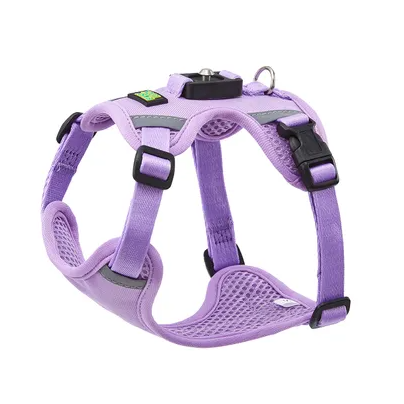
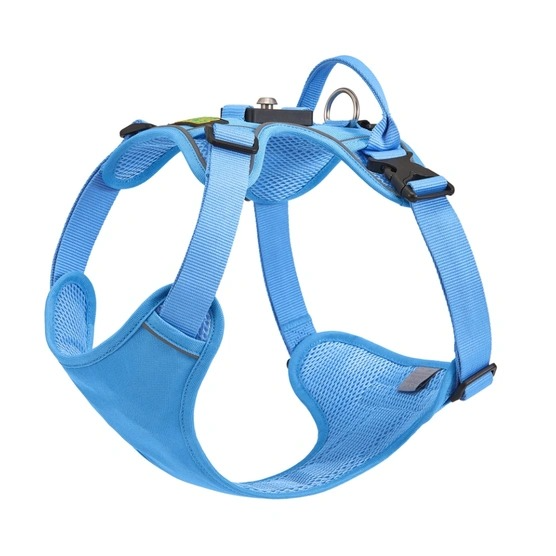
Why a Magnetic Dog Harness Beats a Clip Buckle for Senior Dog Owners
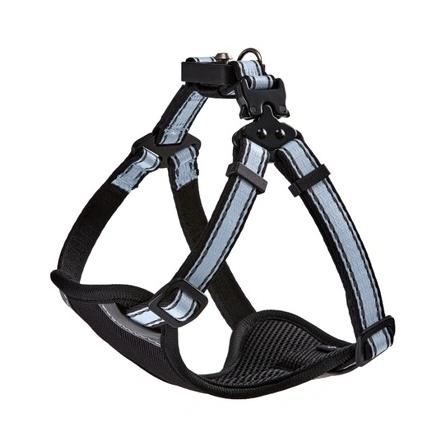
A magnetic dog harness wins over senior dog owners the moment they stop fighting a stiff plastic side-release buckle — and that single interaction is why it has become the fastest-growing category in our OEM order book. This article explains, from a manufacturer's bench perspective, why a magnetic dog harness beats a traditional clip buckle for senior dog owners — and what bulk buyers should verify before placing an order.
A magnetic dog harness is easier, faster and safer for senior dog owners to use than a traditional clip-buckle harness because the closure snaps together with a single touch instead of requiring two hands, precise alignment and finger strength. In our factory, we have spent years refining the magnetic dog harness closure for exactly this user group, and the feedback loop from distributors in 15 countries keeps pointing to the same conclusion: the clip buckle is the single biggest daily friction point for owners with reduced grip strength, arthritis or tremors. This article breaks down the engineering reasons behind that conclusion and translates them into practical buying criteria for B2B customers.
Understanding the Necessity of a Magnetic Dog Harness
Before I joined the pet products side of the webbing industry, I spent over a decade supplying straps and closures to global brands, and one lesson transferred perfectly: the closure is where users judge the whole product. A harness can have beautiful fabric and perfect stitching, but if the owner fights the buckle every single morning, the product fails in their mind. Senior dog owners feel this failure more than any other group.
Consider what a traditional side-release clip demands from the user. The two halves must be aligned correctly, squeezed together with enough force to overcome the spring latch, and sometimes — when the buckle is new or the mechanism is stiff — pressed twice. For a person with arthritis in the thumbs, or reduced sensation after a stroke, that sequence is not a convenience detail. It is a barrier that determines whether the dog gets walked at all. Our customer service partners at distributor level have told us, more than once, that returned or abandoned harnesses are disproportionately traced to buckle complaints rather than fit or fabric complaints.
A magnetic dog harness inverts that interaction. The two halves find each other. Bring the connector close and the magnets pull it into alignment, then the stainless steel quick-connect mechanism seats with an audible click. One hand, no pinch, no precise alignment. That single change converts the hardest moment of the walk into the easiest one, and it is precisely why our magnetic dog harness line keeps winning repeat orders from buyers who serve the senior-owner segment.
How the Magnetic Closure Actually Works
There is a lot of vague marketing language around magnetic closures, so let me describe what sits inside the housing. Our fifth-generation EASYLOCK magnetic system uses a magnetic stainless steel quick-connect closure: two mating halves, each housing a neodymium-free magnetic array (a detail we will come back to), guided by a tapered funnel geometry so the halves self-align within a few millimeters of approach. Once the magnets draw the halves together, a mechanical latch completes the connection, so the bond the dog experiences is not magnet strength alone but a positive mechanical lock.
This distinction matters enormously for buyers. A pure magnet-to-magnet connection that relies on magnetic holding force alone will creep apart under load, especially with a strong puller on the other end of the leash. Our design pairs the magnets for alignment with a stainless steel latch for retention, and the whole assembly is pull-tested to 190kg+ before a production run ships. The single-touch release button sits on the outer face, recessed enough that a paw or brush against grass cannot trigger it, but easy for a thumb — even a weak thumb — to press deliberately.
The single-touch release is covered by our patented Mag-Clip technology, which you can read about in detail on our magnetic buckle technology page. For OEM customers, the practical meaning is this: you are not buying a generic magnet glued into a plastic shell. You are buying a patented, generation-five mechanism with a documented engineering history behind it.
Why Senior Dog Owners Specifically Benefit
One-Hand Operation Changes the Geometry of the Walk
Watch a senior owner with a clip-buckle harness and you will usually see the same sequence: leash in one hand, dog crowding close, harness halves in the other hand, and a moment of controlled fumbling under the chest. Now the owner has to either drop the leash, trap it underfoot, or ask the dog to hold still — and most dogs will not hold still. With a magnetic dog harness, the owner keeps the leash in one hand, brings the two chest panels together with the other, and the closure does the aligning. The entire operation happens in the space of a breath.
No Pinch Risk on Aging Fingers
Side-release clips pinch. It is in their nature — the spring latch needs skin to stay clear of the jaws. Owners with reduced skin elasticity or on blood-thinning medication care about this a great deal, and so do we. The magnetic approach closes from the outside in: fingers stay on the housing shells, never between the jaws. In three years of distributor feedback on this closure family, pinch complaints have been effectively zero, which is a sentence I could never write about a traditional buckle.
Reduced Bend-Down Time
Most chest-clip fumbling happens at waist height or lower, which means the owner is bending, balancing and rushing all at once. Faster closure means less time bent over. For owners who deal with balance issues, cutting the bend-down window from fifteen seconds to two is not a luxury; it is a fall-prevention measure. This is the kind of benefit that never shows up in a spec sheet but drives every repeat purchase in this segment.
From Our Production Notes
EASY LOCK was founded in 2018, backed by more than 15 years of webbing manufacturing experience, and spent three years in development with over 100 rounds of material testing before launching the fifth-generation magnetic system. Those numbers are not decoration — they are the reason the closure survives daily senior-owner use, where cheaper magnetic closures on the market fail within months.
Key Material Specifications That Matter for B2B Buyers
If you source a magnetic dog harness for the senior-owner segment, the closure gets the headlines but the materials decide the return rate. Here is the checklist we walk through with OEM and wholesale clients, in the order we recommend you audit any supplier.
| Component | What to Verify | Why It Matters |
|---|---|---|
| Closure housing | Stainless steel contact parts, not plated zinc alloy | Plating wears; bare zinc corrodes with saliva and rain |
| Webbing | Ultra-soft woven fabric with anti-chafe finish | Senior dogs often have thinning skin; chafing drives returns |
| Reflective strips | Stitched-in reflective yarn, not glued film | Glued film delaminates after washing cycles |
| Adjustment sliders | Adjustable buckles that hold under load without slipping | Slipping straps change fit and load distribution mid-walk |
| D-ring attachment | Compatible with traditional leashes and tags | Buyers keep existing leashes; incompatibility blocks the sale |
On the fabric side, we hold our webbing to textile-industry standards rather than pet-industry habits: OEKO-TEX Standard 100 for skin-contact safety on dyed fabric, AATCC 61 and ISO 105 methods for colorfastness to washing, and Martindale abrasion testing per ASTM D4966 on high-rub zones. None of this is exotic. All of it is the difference between a harness that looks new after fifty washes and one that looks done after five.
How to Choose the Right Magnetic Dog Harness for Your Customer Base
Distributors ask us how to position the magnetic dog harness within an existing range, and our answer starts with the dog, not the owner. The fifth-generation closure adds a small amount of housing weight compared with a bare plastic buckle, so for toy breeds we recommend the lighter configurations from our dog harness collection, where the weight-to-body-ratio stays comfortable. For medium and large breeds, the added housing weight is negligible and the load-bearing advantage becomes the headline.
For retailers and brand owners serving senior owners, the second question is collection styling. Senior owners are not a demographic that tolerates "medical-looking" products; they want the same color and design energy as anyone else. Our Vitality Collection harness exists for exactly this reason — full magnetic closure engineering in a palette that reads as lifestyle, not mobility aid. In our experience, that framing decision alone moves conversion rates at shelf.
The third question is size coverage. A senior-owner-focused program should span XS through XL, because the "senior owner" demographic owns everything from Chihuahuas to Labs, and truncating the size range truncates the addressable shelf. As the factory behind the product, we produce all five sizes with the same closure hardware, which keeps your SKU logic clean and your reorder cycles simple.
The EASY LOCK Advantage
We are often asked what separates a magnetic dog harness from EASY LOCK from the generic magnetic closures that appeared on marketplaces in the last two years. Three things, and all three are structural rather than cosmetic.
First, mechanism depth. Our fifth-generation EASYLOCK magnetic system is the product of a three-year development cycle and 100+ rounds of material testing, protected by national patents including the Mag-Clip single-touch release. Generic copies skip the latch-and-align architecture and ship a magnet in a shell; the difference shows up within weeks of real use.
Second, vertical webbing capability. With more than 15 years of webbing manufacturing behind the brand, we weave and finish our own straps instead of buying them at the mercy of the spot market. That control is why we can commit to ultra-soft, anti-chafe finishes and stitched-in reflective strips as standard, and why customers in 15 countries treat our harness line as a platform rather than a one-off SKU.
Third, manufacturing positioning. We are a factory and supplier — OEM and ODM both — not a retail chain. When a buyer needs a custom colorway, a modified housing color, private branding or a specific size curve, the conversation happens with the people who run the production line, not with a trading desk. For B2B customers, that is the whole ballgame.
Frequently Asked Questions
Q1: Is a magnetic dog harness safe for strong pullers?
Yes, provided the closure pairs magnets with a mechanical latch — as ours does. The magnetic force handles alignment; the stainless steel latch handles retention. Our closures are pull-tested to 190kg+ before release. A design that relies on magnet holding force alone should not be used with strong pullers, regardless of brand.
Q2: Can a senior owner really close it with one hand?
That is the design intent. Bring the two halves within a few centimeters and the magnetic array self-aligns them; the final seating takes one thumb-press. Owners with arthritis, tremors or reduced grip strength consistently report this as the feature that keeps them using the harness daily.
Q3: Does the magnetic closure interfere with the dog's collar tags?
No. The D-ring attachment point is compatible with traditional leashes and tags, and the closure housing sits on the chest panel away from the attachment geometry. Tags hang from the collar or D-ring as usual.
Q4: What sizes and adjustments are available for OEM orders?
The harness line spans XS to XL with adjustable buckles on the main straps. For OEM and ODM programs, size curves, webbing colors and housing finishes are all configurable at the factory level — send your market's size distribution and we will match it.
Final Thoughts
The case for the magnetic dog harness among senior dog owners is not a marketing story; it is an ergonomics story. A clip buckle asks the user for alignment, strength and dexterity. A magnetic closure asks for proximity. For the fastest-growing segment of dog owners in most Western markets, that difference decides whether the harness gets used every day or lives in the closet. Manufacturers who understand this — and who engineer the closure with a real latch, real stainless steel and real pull-test data — are the ones whose products earn repeat orders.
If you are building a range for this segment, start with the closure, audit the materials against the checklist above, and choose a partner whose magnetic dog harness platform is patented, tested and vertically manufactured. That is precisely the product EASY LOCK has shipped to buyers in 15 countries since 2018, and it is the product we would put in front of any senior-owner program. To see the current range and closure configurations, visit the EASY LOCK magnetic dog harness page or explore the full product catalog.
Sourcing for Senior Owners Starts With the Closure
Talk directly to the factory behind the fifth-generation EASYLOCK magnetic system. We will walk you through configurations, OEM options and size curves for your market.
Start Your OEM Conversation